The Art of Confrontation explores the mind of someone who avoids real-life conflicts, instead retreating into overthinking and mentally rehearsing confrontations. If you’re someone who does this, you’ve likely felt the thrill of imagined victories—or perhaps, you haven’t…
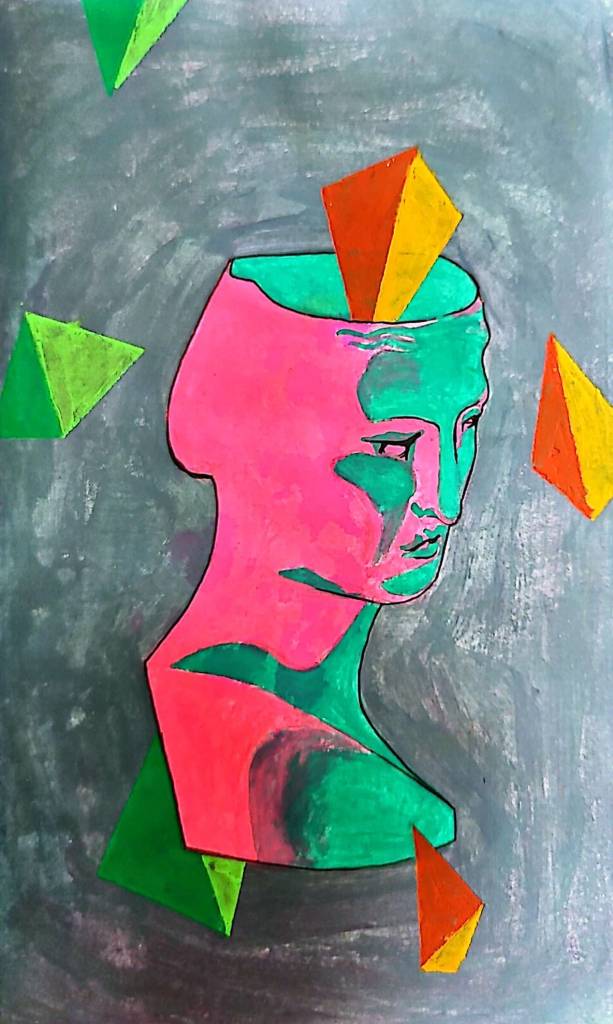
The mind is often the safest battlefield for confrontations—a wild arena where audacious scenarios play out without interruption or consequence. We have all been there: mentally confronting a partner, a colleague, or a boss. Inside our heads, the monologue flows seamlessly, unchallenged, and with a guaranteed 100% success rate.
Consider any matter that demands a solution, a defense, or a definitive stance. Picture those moments when you’re unwilling to hear “no.” The fantasy of a confrontation unfolds effortlessly, granting you absolute victory. It is quite interesting how when we take the decision to confront someone, we always eliminate the option of losing.
But here’s a fact:
The couch is the wrong place for confrontation. It is where we unwind after a long day, where conversations lean toward affection rather than conflict. Confrontation demands movement—feet grounded, body in motion. You need space, both physical and mental.
The most effective confrontations happen when you are alone. Take a brisk walk or a light jog—both work wonders. As you move, your mind sifts through details you may have overlooked when you first decided to confront someone. Clarity comes with motion. When you create physical distance, the world fades into the background. You are alone, yet fully present, undistracted by immediate surroundings. Confrontation isn’t just about words—it’s about perspective, and that requires space.
The moment you shift from passive contemplation to movement, your thoughts transform. It’s remarkable how unresolved scenarios—even long-buried traumas—resurface the instant you are alone, suspended in motion, much like the suspended man.
And if the same mental confrontation keeps replaying, it’s because the other person never had the chance to respond. But perhaps these replays aren’t about giving them a voice. Perhaps they exist to sharpen our own—to refine our arguments until they are undeniable.
The irony? You will never lose these imaginary confrontations. Yet, you refine them endlessly—revising, replaying, inserting the perfect retort you didn’t think of before. Each time, you edge closer to an imagined victory, chasing a perfection that never truly arrives. But is it even about winning? Or is it the illusion of control—the belief that, with enough revisions, the past might finally yield a different outcome?
The mind holds extraordinary power, retrieving incidents with startling clarity. In its confines, there’s no judgment, no blame—just you. And isn’t that a comforting thought?
I can’t count the times I’ve confronted my partner in my mind. In those imagined battles, I was sharp, relentless—every word precise, every argument airtight. Unlike in real life, where silence held me hostage, where I froze, unable to summon the right words, these mental showdowns felt like triumphs. They were more than just rehearsals; they were victories. The only victories I ever had. In my mind, I didn’t falter. I didn’t stumble over emotions or second-guess myself. I said everything I needed to say, exactly how I needed to say it. And for a fleeting moment, it was unbelievably therapeutic—proof that, at least somewhere, my voice was heard.
The harshest dilemmas often find their resolution in that sacred mental space, where the mind holds the power to offer both solace and clarity. In those quiet moments of reflection, it’s not the physical confrontation that dictates the outcome, but the quiet strength of thought. There’s a paradox in conflict: in war, there are no true winners. Both sides are scarred, altered. Yet, if there is ever a victory, it’s not fought on the battlefield but within the mind. In the quiet aftermath, when the emotions settle, the true victory lies in how we reshape our understanding, how we come to terms with the conflict and find peace within ourselves. This is where the real power lies—not in the external fight, but in the internal one.


 Lifelines
Leave a reply to Lifelines Cancel reply