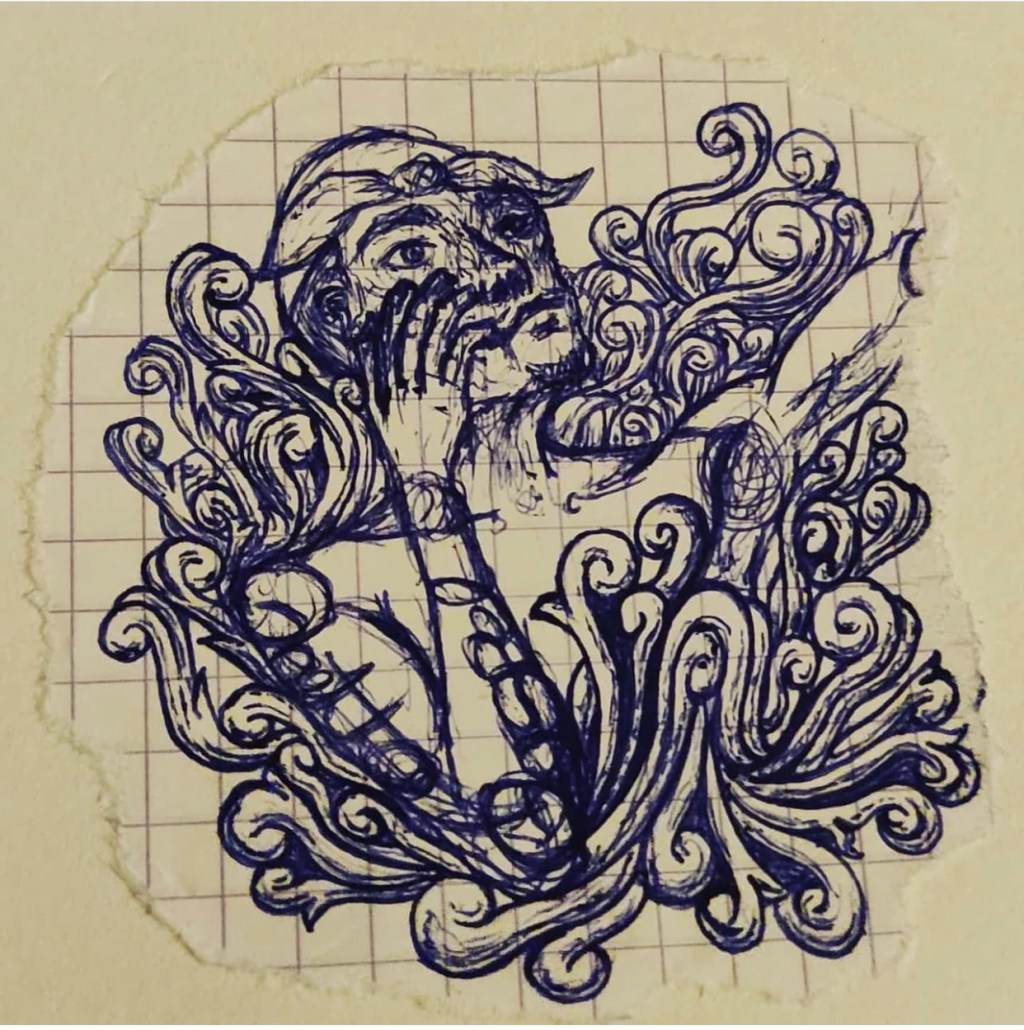

Have we ever stopped to consider that the person we feel we’re submitting to isn’t really the person themselves—but rather, the concept they represent? The mother whose wishes we obey—perhaps it’s not her voice we heed, but the powerful symbol of motherhood, evoking respect, duty, and gratitude. The child whose desires we rush to meet—it may not be the actual child, but the enduring idea of helplessness and innocence, a figure we resist seeing as mature, capable, or independent.
And then there’s the man—whose preferences we try to accommodate, whose discontent we try to prevent. You might say this isn’t always true, and of course, it varies. But I’ve noticed this pattern often, especially among couples in my age group (late 40s to early 50s). There’s an unspoken expectation—on both sides. The woman is expected to be considerate, to adapt. And the man is also expected to… but when tension arises, it’s the woman who so often spirals into guilt. She overthinks the exchange, replays the words, analyzes what she said—or didn’t say—and wonders what she could’ve done differently. Even when she knows, deep down, that she was right. Even when she senses that he was the one in the wrong, she still questions herself. Because she would’ve been more cautious. More measured.
Why is it so difficult for a woman to feel absolutely no guilt? No lingering sense of responsibility? Could it be that the shadow of Eve still lingers—that we are forever burdened by the myth of the original sin?
In a woman’s mind, she is strong and independent. She is mature enough to make her own choices and build a future from scratch. Yes, she is capable and can thrive on her own. Yet, she often walks in his shadow—like the primitive man depicted in Darwin’s theory of evolution. She has evolved, yes, but the man still holds the highest rank and leads, while she follows.
For someone like me, caught between the old and modern schools of thought, it is both astonishing and difficult to fully accept young women today who are building lives completely independent of men. It is a mixture of admiration and, at the same time, a subtle resistance to how she no longer needs him as a part of her life — how she puts herself first, her career, and her dreams rather than his, and how she guards her future from any plans that might jeopardize it.
I remember years ago when a great opportunity presented itself. Funny enough, I’ll never know whether it would have changed my life forever, but it was a chance I ended up snatching away from myself. Fourteen years ago, a friend recommended me for the perfect job — an office manager position at one of Dubai’s most reputable companies. I went for the interview and felt victorious when they called me for a second round. The work environment was ideal, the salary tempting, and it was the career change I had been yearning for.
That evening, I sat down and told my husband about it — only to be shocked by his reaction. He wasn’t angry that I had gone for the interview; he was upset that I would have to work longer hours and wouldn’t be there when the kids came home from school. Suddenly, I was petrified as I realized that my ambitions might be seen as a threat to the family- I blamed myself.
I overthought it then, overwhelmed with guilt for even considering the opportunity. I remember how quickly and submissively I dismissed it, waking up to my usual restrictive job as if the dream had never existed. At that time, I came to see that as a skill — the ability to swiftly set aside personal dreams, blame oneself to have ever considered a change and to finally do something for the person you are.
What lingered most was the guilt: the heavy awareness that my decision would impact my family, especially my children- it was not the life-changing opportunity that i have dismissed and missed.
The days that followed were filled with a mix of guilt and self-reflection, questioning my irresponsible selfishness or rashness. But I moved past it and focused on being the perfect mother and wife — only to realize many years later that the eyes of the beholder never envisioned me as either the great mother or wife, and also funny enough, many years later, also, I was convinced that I was both.
At the time, I thought I made the right decision. Now, I see I made the wrong one — sacrificing my own growth for the sake of another, preventing myself from evolving and becoming who I should have become. How foolish we can be when we tie our future to a concept embodied by a person — the idea of a husband, a child, and a family — rather than the decision that could have made all of these concepts even better.
Never tie your happiness and future to someone who represents a concept you were raised to believe in. The concept might be wrong and those representing it might grow out of what they represent. At that moment you will be left alone, and will always be too late.









 Lifelines