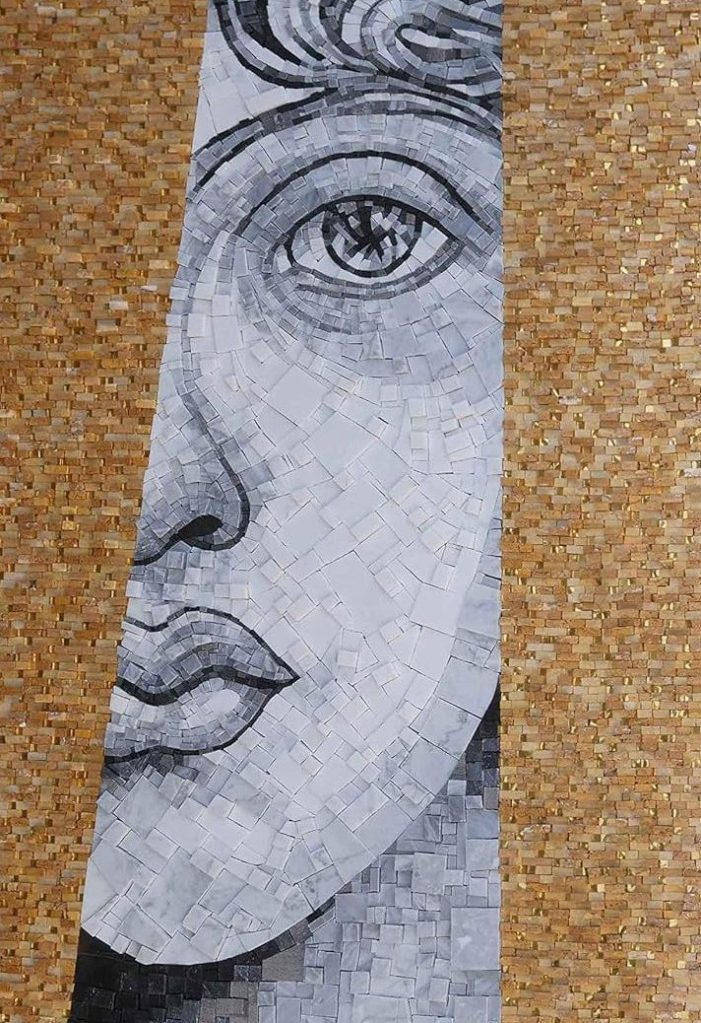
We are never just one thing. Each step we take, each fleeting encounter, adds another piece to the mosaic of who we become. Mosaics of Myself is a reflective journey through memory and identity, woven together by the people who have left their imprints—some in passing, others more deeply. From university days to unexpected premonitions, from quiet admiration to self-discovery, this piece explores how the fragments of others shape us in ways both profound and imperceptible. At any given moment, we are merely a reflection of the dominant piece in focus—never the final version, always evolving.
I wrote this piece on Friday, March 14, 2025 during my early morning run—composing it in my head as I circled the park, savoring the rare luxury of an 8:00 AM late clock-in during Ramadan.
This morning, my mind drifted back to my university days. I thought of Noora, a fellow Lit major and my occasional running companion—or rather, the runner I aspired to be. Noora had the discipline; I had the admiration.
Three years after graduating, I woke up with an inexplicable certainty: I would see Noora’s mother that day, and she would tell me that Noora’s dad had passed away.
It made no sense—I hadn’t seen or even thought of Noora since we graduated. This was long before mobile phones, and life had pulled us in different directions.
That same day, I headed to a doctor’s appointment at the Blue Building in Hamra, hoping for a solution to my untamed pupil. I had looked into it years ago and learned it was caused by a loosened nerve, making my eye defy normal reflexes. It wasn’t something that had truly bothered me—at least, not until others pointed it out. School friends had taunted me about it, and their words lingered. That day, I finally decided to do something about it.
Yet, here I am, approaching fifty this September, and I still haven’t fixed it. Just like so many other things in my life, it only seems to matter when someone else makes a comment.
As I got older, I faced another issue. Whenever I looked at a student in class and called their name, they would hesitate, confused, and ask if I was actually speaking to them. Over time, I found a way to turn it into a joke. I would tell them, completely straight-faced, that I had a glass eye—a result of a terrible accident back in school. Then, for dramatic effect, I’d link it to Edgar Allan Poe’s The Tell-Tale Heart, comparing myself to the old man with the eerie, frozen glass eye. It always got a laugh, distracting them just enough to shift their focus from me to an intriguing story. The tale was never rehearsed, never planned—just like so many others I’ve created over the years, little diversions crafted in the moment- to distract and shift focus.
I left the doctor’s clinic, disappointed by his diagnosis.
“So, how old are you, Neamat?” he asked.
“Twenty-five, doctor. Is it too late?”
“Well, it can be done, but you are 25 years late.”
His words weighed on me as I stepped outside the American University Hospital (AUH). And then, as if fate had arranged it, I saw her—Noora’s mother. Elegant as ever, draped entirely in beautiful black.
I hugged her, asked about Noora whom she said was now married with a little baby boy (I believe). And yes—she was at AUH finalizing paperwork because her husband had passed away following complications from open-heart surgery.
I was stunned—not just by the news, but by the eerie accuracy of my premonition. I wanted to say, I knew. I wanted to marvel at the strange pull of intuition. But for one of the rare times in my life, I held my tongue.
Noora was serious, disciplined, and determined. I was hardworking too, but for me, literature was more pleasure than obligation, more passion than pursuit. She wore round glasses that framed her hazel eyes, giving her an air of quiet intensity. I still remember the way the sunlight caught the natural highlights in her curls, the way her honey-suckled tan seemed to glow. Noora was, in every sense, a honey jar—warm, rich, unshaken. She was everything I admired but never sought to become.
Less social than I, she invited me—always polite, never pushy—on her near-daily runs around the Green Field adjacent to AUB beach. I loved the spectacle—the attention of passing juniors and seniors, the thrill of standing out. Noora, in contrast, was focused only on the run.
While she completed three, sometimes more, full laps, I barely made it through one before gasping for breath and surrendering to the sun at the AUB beach. We were opposites, yet connected in ways I never fully understood.
Over time, we drifted apart—not that we were ever truly close. By junior and senior years, our interactions had dwindled to brief, knowing smiles across lecture halls. She remained the studious note-taker, buried in novels, while I skimmed through readings, drawn not just to literature but to life beyond the pages. In the end, it wasn’t just stories that captivated me—it was people. Their lives, their voices, their unspoken narratives. And in time, I became a storyteller, shaped by those who unknowingly left their imprints on me.
Noora and I never ran together again, but every time I set out for a run, I know—deep within me—that she nurtured my love for it. I became the runner I once admired in her, but I never quite mastered the discipline she carried into everything she did.
In the years that followed, I often saw her heading off for her runs while I made my way to Jafet Library, working extra hours to maintain my scholarship. I found solace among books—pulling them from shelves, returning them, absorbing their silent presence, and attracted by their titles rather than content.
Eventually, I exchanged the solitude of running for a more social pursuit. Drawn not so much by ideology as by the magnetic presence of a man named Mugheer, I found myself in a club where voices rose and fell in passionate political debate. I listened, nodding at arguments I barely grasped, pretending to care more than I did. It wasn’t the discussions that held me there, but the thrill of proximity—to him, to something larger than myself. When my fascination with Mugheer shortly after waned, my enthusiasm for the cause did too.
and so, I drifted back to the Cafeteria, I resumed my quiet search—not for food or coffee, but for connection, for something, or someone, to anchor me again.
Looking back, I realize I was curating versions of myself, aligning with different personas—Noora, the disciplined scholar; Sawsan, the cool charismatic intellectual; Dina, the refined beauty and intelligence. If you think about it, we are mosaics of the people we encounter. Strangely, we often absorb more from fleeting acquaintances than from lifelong friends. Perhaps because, in them, we see versions of ourselves we long for—untainted by the deeper flaws that time inevitably reveals.
But where did the most defining piece of my mosaic come from? That wild, untamed spirit—the playful clown, the relentless pleaser—where was it born? I comb through the convulsions of my brain, sift through the folds of memory, searching for the source. Was it inherited, absorbed, or stolen from someone I once knew? Or did I pluck it from the chaotic energy of the universe itself?
No matter how deep I dig, how far back I reach, I find no single origin, no singular figure to whom I can say, this is where it began. Perhaps it was never meant to be traced, never meant to be owned—only carried, only lived.
The people we pass in stairwells, those who brush against the edges of our existence in fleeting yet vivid moments, leave behind more than just echoes—they leave imprints, fragments of themselves that settle into the crevices of who we are. The well-dressed, the popular, the brilliant, the beautiful—all of them, in their own way, stitch themselves into the fabric of our becoming. We may not fully embody them, yet their essence lingers, shaping the contours of our identity in ways both subtle and profound.
We are a mosaic of borrowed laughter, observed elegance, and distant admiration. A patchwork of voices we have loved, gestures we have imitated, and energies we have absorbed, sometimes without even realizing it. And yet, at any given time, the self we present to the world is but a fragment, a dominant piece momentarily in focus. It is not our whole truth—only the version that rises to the surface, shaped by circumstance, by need, by the quiet negotiations of the soul.
Beneath it all, the quieter, lesser-seen aspects of ourselves remain—dormant, waiting. Waiting for the right moment, the right place, the right person to call them forth, to remind us that we are never just one thing. We are an ever-evolving portrait of all we have encountered, all we have cherished, all we have chosen to carry within us.
The person we are today is not the final version!


 Lifelines
Leave a comment